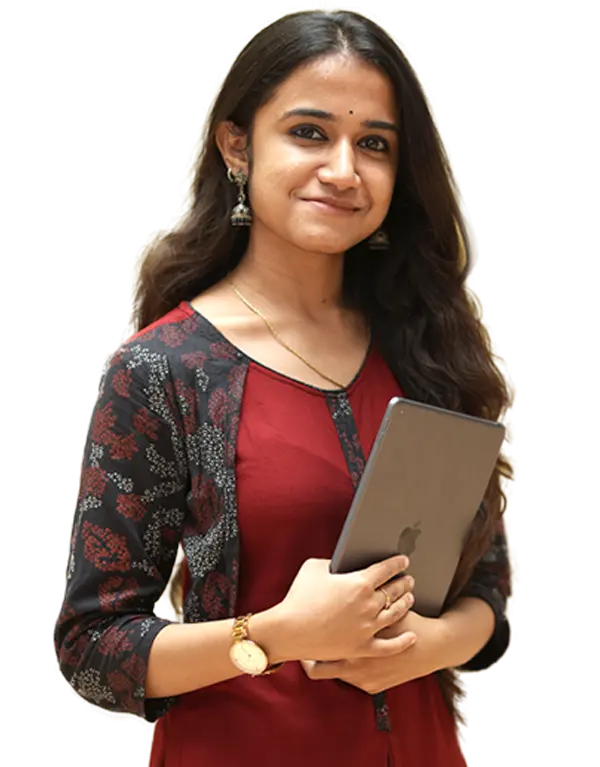
B.Tech in Electronics and Communication (Advanced Communication Technology) {B.Tech in E&C (ACT)} is an AICTE approved programme focusing on ‘Skilling India for Next Generation Telecom Technologies’. This programme is a specialization in Electronics and Communication Engineering with an emphasis on Data Communication and Telecommunication technologies. This is to provide expertise to those students who seek specialization in Device-to-Device Communication and Next-Gen Telecommunication standards.
The main focus of the E&C (ACT) programme is on Communication Networks, Embedded Systems, Digital Signal Processing, 5G, WiFi 6, IoT, Network Security, Information Technology and Advanced Communication Technologies. The course also covers foundation subjects in Computer Science, Programming and Application development. A strong emphasis is placed throughout the course on developing the practical skills and on the in-depth knowledge that are required by today’s industries.
Vision
To empower individuals, contribute to community development, and cultivate expertise in state-of-the-art electronics and communication technologies while fostering innovation in advanced communication technology.
Mission
To deliver specialised education in electronics and communication that supports socio-economic development of the region, while developing technically competent professionals with credibility, integrity, and ethical standards through a dynamic learning environment.
- The graduate should have an effective foundation in mathematics, science as well as other relevant disciplines and a strong foundation in Electronics and Communication (Advanced Communication Technology) Engineering.
- The graduate will inculcate effective communication skills, teamwork, lifelong learning and leadership in preparation for a successful career in industry and academia with credibility, integrity and ethics.
- The graduate will be able to design and develop innovative systems that contribute to socio-economic development.
- PO1: Engineering Knowledge: Apply knowledge of mathematics, natural science, computing, engineering fundamentals and an engineering specialization as specified in WK1 to WK4 respectively to develop to the solution of complex engineering problems.
- PO2: Problem Analysis: Identify, formulate, review research literature and analyze complex engineering problems reaching substantiated conclusions with consideration for sustainable development.
- PO3: Design/Development of Solutions: Design creative solutions for complex engineering problems and design/develop systems/components/processes to meet identified needs with consideration for the public health and safety, whole-life cost, net zero carbon, culture, society and environment as required.
- PO4: Conduct Investigations of Complex Problems: Conduct investigations of complex engineering problems using research-based knowledge including design of experiments, modelling, analysis & interpretation of data to provide valid conclusions.
- PO5: Engineering Tool Usage: Create, select and apply appropriate techniques, resources and modern engineering & IT tools, including prediction and modelling recognizing their limitations to solve complex engineering problems.
- PO6: The Engineer and The World: Analyze and evaluate societal and environmental aspects while solving complex engineering problems for its impact on sustainability with reference to economy, health, safety, legal framework, culture and environment.
- PO7: Ethics: Apply ethical principles and commit to professional ethics, human values, diversity and inclusion; adhere to national & international laws.
- PO8: Individual and Collaborative Team work:Function effectively as an individual, and as a member or leader in diverse/multi-disciplinary teams.
- PO9: Communication: Communicate effectively and inclusively within the engineering community and society at large, such as being able to comprehend and write effective reports and design documentation, make effective presentations considering cultural, language, and learning differences
- PO10: Project Management and Finance: Apply knowledge and understanding of engineering management principles and economic decision-making and apply these to one’s own work, as a member and leader in a team, and to manage projects and in multidisciplinary environments.
- PO11: Life-Long Learning: Recognize the need for and have the preparation and ability for i) independent and life-long learning ii) adaptability to new and emerging technologies and iii) critical thinking in the broadest context of technological change.
The student should be able to:
- Understand the concepts and applications in the field of communication, signal processing, VLSI, embedded systems, power electronics and control systems.
- Effectively apply the domain knowledge to arrive at optimum solutions to real time applications.
- Apply acquired skills in project management and execution to Electronics and Communication (Advanced Communication Technology) systems.
Facilities

Electronic Circuits and Instrumentation Laboratory
The Department has established an Electronic Circuits Laboratory based on DigiToad Technologies test and measurement platforms.
Read More
Programming, PCB Design and Computer Networking Laboratories
The Department of Advanced Communication Technology (ACT), NMAM Institute of Technology,
Read More
Advanced Electromagnetic and RF Design Laboratory
The Department of Advanced Communication Technology (ACT), NMAM Institute of Technology
Read More
Advanced Wireless Communication Laboratory
The Department of Advanced Communication Technology (ACT), NMAM Institute of Technology, Nitte
Read More
Centre of Excellence in Internet of Things (IoT)
The Department of Advanced Communication Technology (ACT), NMAM Institute of Technology, Nitte, has established
Read MoreFor any information regarding the admissions,mail us at: info@nitte.edu.in

Faculty


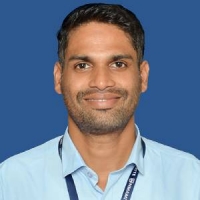
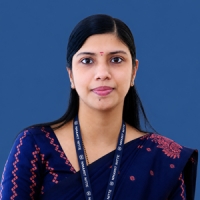
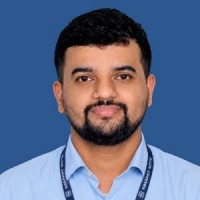


| Name | Designation |
|---|---|
| Ms. DEEKSHITHA | LAB ASSISTANT |
| Ms. AMITHA KUMARI | LAB ASSISTANT |
| Ms. NEESHA | ATTENDER |
Department Activities
Date: 18 October 2025
The ACTs student club Advanced Communication Students Association (ACSA) organised “Promptstrom” on 18 October 2025. The session, led by Mr. Anish Kumar, focused on Full Stack Web Development using Artificial Intelligence and introduced students to the integration of AI tools in modern web development. Participants gained insights into AI-assisted front-end and back-end development, practical applications of AI in coding, and emerging trends in intelligent software development. The interactive session provided valuable exposure to the growing role of AI in enhancing productivity and innovation in web technologies.


Date: 22 to 24 January 2026
The Department of Advanced Communication Technology (ACT) organised a Three-Day Workshop on “Recent Trends in Communication and Technology - Pathway from 5G towards 6G” to provide participants with insights into emerging wireless communication technologies. The workshop featured expert talks from distinguished academicians, industry professionals, and researchers from DRDO, IITs, MIT Manipal, RVCE, and Keysight Technologies. The sessions covered key topics including 5G and 6G communication systems, antenna design, microwave and millimeter-wave technologies, MIMO, beamforming, metasurfaces, and Reconfigurable Intelligent Surfaces (RIS). The workshop offered a comprehensive understanding of next-generation communication technologies while fostering research interest and innovation among participants.


Date: 31 January 2026
The Department of Advanced Communication Technology (ACT) organised a One-Day Workshop on “Antenna Fabrication for Satellite Tracking and Weather Forecast Data Collection” to provide participants with practical exposure to satellite and wireless communication systems. The workshop covered amateur radio communication, satellite operations, Low Earth Orbit (LEO) satellite tracking, and weather data reception from Geostationary Earth Orbit (GEO) satellites. Participants gained hands-on experience in Yagi antenna design and fabrication, satellite tracking, weather image reception, and software-defined radio (SDR) applications. The workshop offered valuable insights into modern satellite communication technologies and data collection techniques through interactive demonstrations and practical sessions.


Date: 19,20, and 26 to 28 March 2026
The Department of Advanced Communication Technology (ACT), NMAM Institute of Technology, Nitte, organised a Workshop on IoT-Based Embedded Systems. Conducted by experts from ZillIoT Technologies, the workshop provided hands-on training in the design and development of IoT and embedded systems using industry-standard platforms from Silicon Labs and NXP. Participants gained practical experience in Bluetooth Low Energy (BLE), Thread, Wi-SUN, Matter, MQTT, and Wi-Fi protocols, along with embedded software development, device interfacing, and wireless network configuration. The workshop enhanced participants’ understanding of modern IoT technologies while strengthening industry-academia collaboration and research capabilities within the department.


Date: 27 to 29 March 2026
The Department of Electronics and Communication Engineering (Advanced Communication Technology), NMAMIT, Nitte, organised a Three-Day Communication Workshop to provide students with practical exposure to modern communication systems. The workshop covered wireless communication concepts, Software Defined Radio (SDR), and hands-on training using Analog Discovery Studio, WaveForms, GNU Radio, and USRP platforms. Participants gained practical experience in signal generation and analysis, real-time transmission and reception, signal processing, and communication system configuration, helping them understand the practical aspects of modern communication technologies.


Date: 22 to 24 December 2025
A Three-Day Faculty Development Program (FDP) on “Practical Computer Networking and GNS3-Based Network Simulation” was successfully conducted from 22 to 24 December 2025. The program provided participants with hands-on training in fundamental and advanced networking concepts, focusing on practical implementation using the GNS3 network simulation platform. Faculty members gained experience in computer network hardware devices and interfaces, IPv4 addressing, GNS3 installation and configuration, and the operation of hubs, switches, and routers through simulation. The FDP also covered essential networking topics such as static and dynamic routing, Network Address Translation (NAT), DHCP configuration, server setup, and secure remote access. Through interactive sessions and laboratory exercises, participants enhanced their practical networking skills and acquired valuable experience in designing, configuring, and troubleshooting computer networks in a simulated environment.


- Digital System Design for Communication Technology
- Embedded Systems Programming
Course Description: The Department of Advanced Communication Technology (ACT), in association with the Department of Electronics and Communication Engineering (E&C), introduced an industry-supported course titled Digital System Design for Communication Technology in collaboration with Anmaya Technologies for sixth-semester students during January–April 2026. The course provided hands-on training in FPGA-based implementation of communication systems, enabling students to develop practical skills in digital system design, hardware implementation, and modern communication technologies.

Course Description:The Department of Advanced Communication Technology (ACT), NMAM Institute of Technology, Nitte, introduced an industry-supported course on Embedded Systems Programming in collaboration with Sasken Technologies Limited for 6th-semester students during January–April 2026. The course provided hands-on learning in C programming, microcontrollers, RTOS, and Linux system programming, helping students strengthen their technical skills and enhance their industry readiness.


Ms. Rhea Rodrigues
- DepartmentComputer Science & Engineering
- Designation Pursuing Ph.D in Oncology and Cancer Biology
- Organization University at Buffalo, New York
"NMAMIT allowed me the opportunity to take on new ventures. It could be pitching ideas for workshops or participating in projects that benefit society. Through these opportunities, I gained the confidence to make career-enhancing decisions. In addition, I would like to thank my professors for supporting me throughout my academic career."
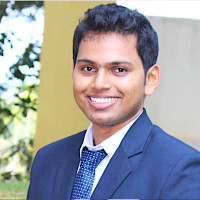
Mr. Amol Revankar
- DepartmentComputer Science & Engineering
- Year of Passing 2019
- Designation Software Engineer
- Organization Accenture
"NMAMIT is an amazing place for students to build their skills and aptitude. The teaching staff are excellent in their fields. Students are great learners. The college not only focuses on academics but also on extra curricular activities promoting students' growth. Summing it up, I say, 'It was an honor for me to be a part of NMAMIT".

Ms. Deeksha Bangera
- Department Computer Science & Engineering
- Year of Passing 2019
- DesignationGraduate Engineer Trainee
- Campus RcruitedMercedes Benz
It was a wonderful experience at NMAMIT, Nitte. The faculty members were always encouraging and supportive. The pre-placement activities were very helpful with all the mock tests and training sessions.

Ms. Deeksha S N
- Department Computer Science & Engineering
- Year of Passing 2019
- DesignationSoftware Development Engineer
- Organization Oracle India Private Limited
I am indebted to NMAMIT for providing me excellent lecturers in my M.Tech programme and opportunities to develop my professional personality. NMAMIT has an amazing Placement cell that invites the best of companies to get their students hired for good positions. I express my deep gratitude to all my teachers of NMAMIT. I had the best facilities -a good library, labs, canteen, hostel, indoor and outdoor sports. I shall always remain grateful to NMAMIT.
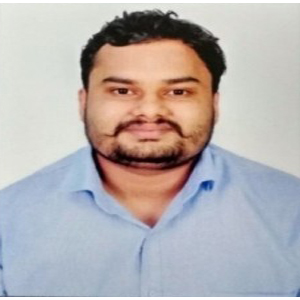
Mr. Manjunatha U
- Department Computer Science & Engineering
- Year of Passing 2019
- Designation Graduate Engineer Trainee
- Organization Mercedes-Benz Research and Development India
My 4 years in college has been absolutely wonderful at NMAMIT. I have been extremely lucky to have professors who made my academic life comfortable thereby providing me time to explore other interests, opportunities to test my skills in various arenas - from technical clubs to sports clubs, from student chapters to college fests.
NMAMIT continuosly supports students by mentoring and counselling from the time of their entry to exit. They also have strict policies against ragging and sexual harassment to provide a safe eco space for growth of all individuals.
I cannot thank the Placement Department enough for the platform they provided for my career. My experience of college life has turned me into a wholesome person, ready to face new challenges in life every day and I wholeheartedly thank each and every one at NMAMIT who have made my college life memorable.
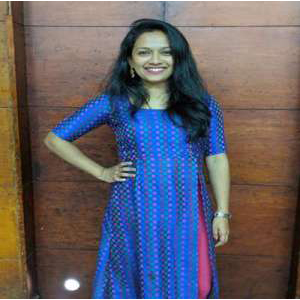
Ms. Pallavi
- Department Computer Science & Engineering
- Year of Passing 2014
- DesignationSenior Software Engineer
- Organization Happiest Minds Technologies Ltd.
"At NMAMIT, I have received equal opportunities in curricular and extra curricular activities. The institute has an outstanding library with a plethora of books for all disciplines of engineering. The faculty are co-operative and provide vital course materials and throw light on open queries throughout the engineering journey. Various companies visit the campus for placements. The placement department simultaneously provides required training and study materials to prepare every individual for interviews and to pursue their future endeavours."
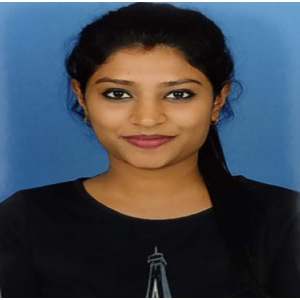
Ms. Preethika Anchan
- Department Computer Science & Engineering
- Year of Passing 2019
- DesignationSolutions Engineer
- Designation VMware
"My sincere appreciation and gratitude to all the staff of NMAMIT and Abhyuday, the Training & Placement Department for their efforts in imparting quality technical education and aptitude training. I am forever grateful to them for helping me to grab the amazing opportunity that came into my life of being a part of VMware".

Mr. Rameez Shuhaib
- Department Computer Science & Engineering
- Year of Passing 2018
- DesignationSoftware Engineer
- Organization Shuttl
"The NMAM institute of Technology has always provided me an opportunity to broaden my skills and to focus on my areas of specific interests in Academics. The friendly attitude of the professors and their willingness to readily offer a helping hand has helped me to improve technically as well as personally. I'm proud to be an NMAMITian".
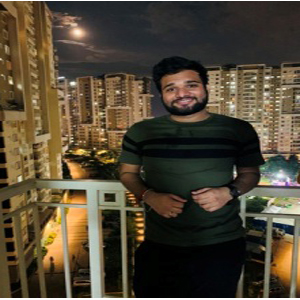
Mr. Shashank S Shetty
- Department Computer Science & Engineering
- Year of Passing 2018
- DesignationSoftware Engineer
- Organization MakeMyTrip & Goibibo
"Education is the passport to the future, for tomorrow belongs to those who prepare for it today."- Malcolm X
I am grateful to NMAMIT, Nittefor providing me opportunities for growth. I had an amazing college journey. “To reach the top of the ladder, one should have a great foundation” they say. NMAMIT has given me just that to improve my professional and soft skills. Students in NMAMIT have the benefit of exposure to the challenges of modern technology. They have opportunities to upgrade their skills with a number of events & activities within the college and at inter collegiate levels. NMAMIT has an amazing bunch of experienced faculty. I have benefited greatly from the friendly, supportive student-teacher interactions. Students and teachers strive to reach higher by stretching their limits.
The college has a very approachable Placement department, where anyone can seek help, be it academic, personal or career related. I have benefited a lot from this. The campus placements are growing constantly with top firms visiting NMAMIT and the placement numbers steadily rising. I would strongly recommend my friends and family to consider NMAMIT as their college of preference.
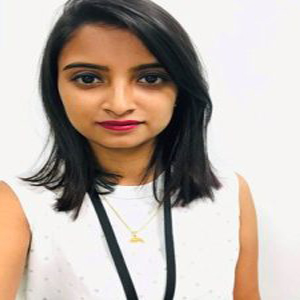
Ms. Siri Vikyath
- Departmentcomputer Science & Engineering
- Year of Passing 2018
- DesignationSenior Quality Assurance Engineer
- Organization Informatica
"My college has played a very important role in the larger journey of my life. It has helped me get where I am today. I will always be grateful to NMAMIT for helping me grow. I am a proud NMAMITIAN. "

Ms. Vandana Nayak
- DepartmentComputer Science Engineering
- Year of Passing 2018
- DesignationSoftware Development Engineer
- Organization IBM India Software Labs
NMAMIT, Nitte has gained immense popularity for the quality of education, faculty and the amazing placement opportunities it offers. The college management is really good and the environment very pleasant and green. Placement department works extra hard to get most of the students placed in reputed companies. Four years of my journey in this college was incredible and lively. Cheers!!
Ms. Varsha P
- DepartmentComputer Science Engineering
- Year of Passing 2018
- Designation Software Engineer
- Organization Informatica
"I joined NMAMIT with hopes of graduating with a job in hand. (I had been allocated a seat in a college in Bangalore but desired to study in my native place and the best choice was NMAMIT.) The advantage of NMAMIT over other colleges in the city is the beauty of nature we get to witness, the humane nature of the people, and the encouraging teachers. They are supportive inside and outside the classroom with academic and extra curricular activities- cultural or sports or just about anything. NMAMIT faculty are like family . They live and teach by example. My journey of 4 years in NMAMIT was joyful and memorable. I have learnt valuable life' lessons along with the curriculum. The brilliant minds at Abhyuday, Placement, make my college truly the best experience one could ever have.
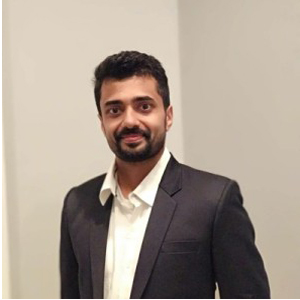
Mr. Vineeth Bangera
- DepartmentComputer Science Engineering
- Year of Passing 2014
- DesignationUX Designer
- Organization NetApp
"I'm fortunate to have found great mentors at NMAMIT who have molded me to explore beyond my horizon by encouraging me to conduct activities that were not limited to a single domain. This ability to think creatively and laterally has definitely helped me find answers during challenging situations. Furthermore, I strongly believe the NMAMIT community including the staff, alumni, and my peers have played a crucial role in my professional career."

Mr. Akshay Kumar
- Department Computer Science
- Year of Passing 2016
- Designation Lead Software Developer
- Organization Collins Aerospace
Well, it is often said “Your attitude, not your aptitude, will determine your altitude”. NMAMIT has been that source which has fine tuned my attitude to help me reach the altitude where I stand today. From enhancing one's self confidence to exploring the credibility, to dream bigger and proceed towards achieving the goals our educational institutions and the faculty, play a major role. I am extremely happy that I got an opportunity to be a student of this wonderful institution which has shaped every individual to come out with flying colors in their life.
The confidence imbibed in each and every student and the support rendered by all the faculty members in NMAMIT is immense and this leads to self development of an individual. Ample opportunities have been provided by the institution to improve oneself in academics as well as extra - curricular activities which definitely enhances the leadership skills in an individual. I am thankful to each and every teacher who has helped me to be a better person in all four years of Engineering. Finally, it is believed that "Education is the passport to the future, for, tomorrow belongs to those who prepare for it today", so keep preparing, keep improving, keep exploring and never give up on your dreams.

Mr. Glenn Thomas Alex
- Department Computer Science & Engineering
- Year of Passing 2019
- Designation Proactive Customer Success Engineer
NMAMIT has always been my second home. It's where I discovered a part of myself, and who I wanted to become. Hearing the word 'Nitte' makes me smile and that's the place I want to go back to, if given a chance.This is why I try my best to help the juniors in their academics, especially with regard to placements, because the outstanding feature of this college is the brilliant placements offered at the end of 4 years.
Mr. Kartikay Dwivedi
- Department Computer Science
- Year of Passing 2016
- Designation Cloud Infrastructure Administrator
- Campus Recruited VMware
The three most important factors influencing success for an engineer are ' Learning Environment, Branch of interest and opportunity for Placements'. NMAMIT provides all three - the ideal atmosphere for learning, best faculty (as I had in CSE who are also friendly and helpful) and, good placements.
Abhyuday, the counselling, welfare, training & placement department works efficiently with concern, to groom all the students to prepare them for life and find placements in the best possible companies. (Placements begin on entering the final year), I even had the rich privilege and freedom of running a program to train the 3rd year students to prepare for placements along with a team of like minded campus recruited students, a process that trains us in compassionate leadership.