Students Works and Exhibits
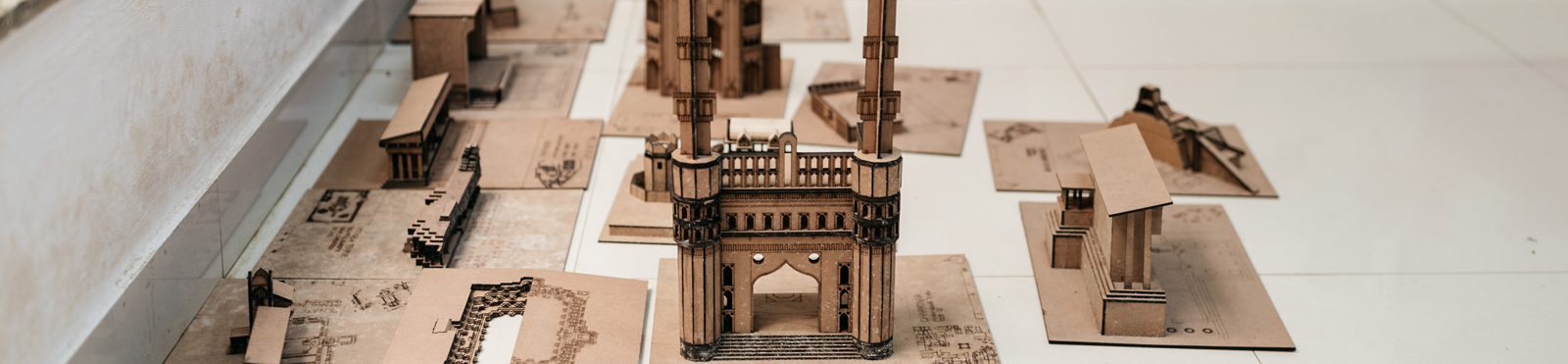
Digital Documentation and Photogrammetry Workshop by Ar. Ragul Ravichandran | 21st to 23rd August 2025
A three-day documentation workshop was conducted at Nitte Institute of Architecture, Mangalore by Ar. Ragul Ravichandran, in collaboration with Ar. Nikita Makhasana, as part of the 7th Semester Urban Design Studio. The workshop focused on documenting the Jeppu Tile Factory, one of the last surviving Mangalore tile factories and an important part of the region’s industrial heritage. The workshop introduced students to a range of methods for architectural documentation. Ar. Ragul guided the students through the use of digital tools such as photogrammetry and 3D modeling, enabling them to generate a detailed digital record of the site. Alongside this, students engaged in manual documentation, recording measurements, architectural details and spatial arrangements through sketches and drawings. This combination of digital and traditional approaches gave students a comprehensive understanding of the factory’s architecture, construction techniques and spatial character. The final outcome of the workshop included a consolidated set of documentation materials - digital models, detailed drawings and narrative records, that captured both the tangible and cultural essence of the Jeppu Tile Factory. This documented base now forms an essential reference for the students as they progress into the design phase of their studio projects. The workshop not only strengthened technical skills but also sensitized students to the importance of preserving industrial heritage through architectural documentation.
.png)
Creative Cartography Workshop | 3rd to 13th September 2025
The Creative Cartography Workshop was a collaborative workshop held from 3rd to 13th September 2025, jointly conducted by Dr.Priya Joseph from Srishti Manipal Institute (SMI) and Ar.Nikita Makhasana from Nitte Institute of Architecture (NIA). The workshop brought together 5 B.Des students from SMI and 23 Semester 7 B.Arch students from NIA to study and map the historic Jeppu Tile Factory in Mangaluru - an industrial site from the 19th century. Through a cross-disciplinary and transmedia approach, students explored creative forms of mapping, that combined digital and analogue methods to reveal the site’s social, ecological and material narratives. The workshop also featured insightful sessions by Dr. Priya Joseph, HoD of B.Des at SMI and Ar. Soundarya from Auroville. As part of a cultural exchange, Srishti students joined NIA’s Onam celebrations, fostering meaningful collaboration and camaraderie. The workshop culminated in an exhibition and presentation of the collective works at the Srishti Open House in Bengaluru, where students received appreciation and feedback from faculty and Ar. Dean D’Cruz, Design Chair at NIA.
.png)
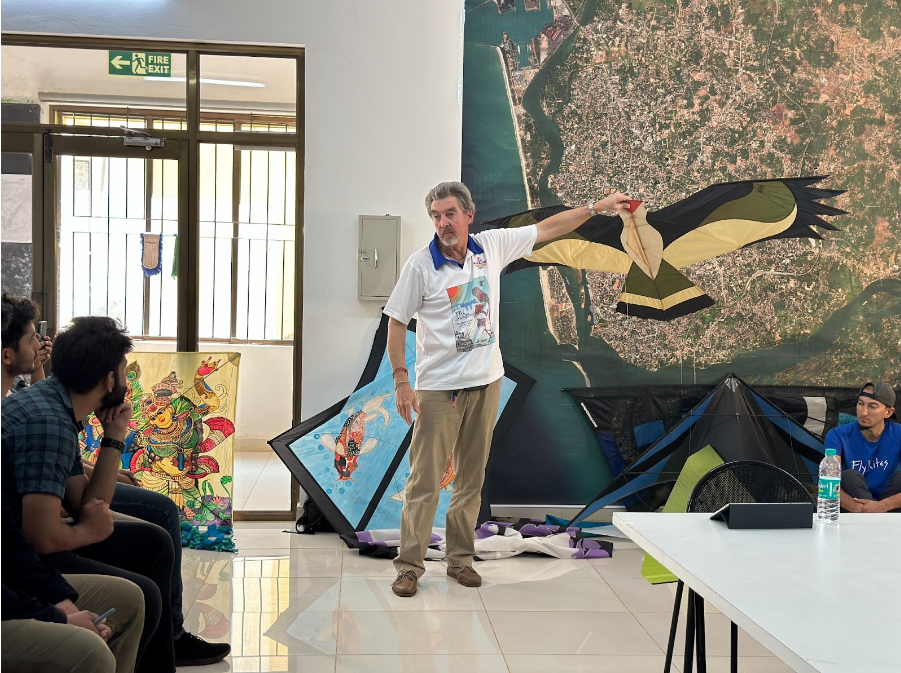
Kite workshop by International kite experts - Konstantin Ratsos (Greece) and Bob Cruikshanks (UK): 17th January, 2025
As part of NIA’s commitment to fostering creative and hands-on learning experiences, a Kite Workshop was organized, featuring two world-renowned experts in kite design and aerodynamics:
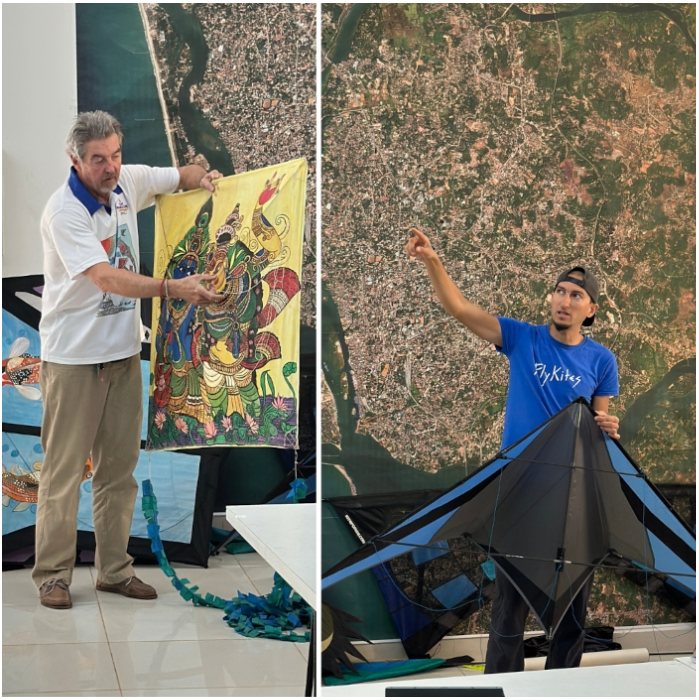
1. Konstantin Ratsos (Greece) – World Kite Challenge Champion 2023
2.Bob Cruikshanks (UK) – Former Avionics Engineer & Master Kite Designer
The workshop provided students with a unique opportunity to delve into the intricate world of kite-making, where engineering meets artistry. Through engaging demonstrations and interactive discussions, the experts shared their journeys, techniques, and the scientific principles behind high-performance kites. The session was both inspiring and energetic, allowing participants to appreciate the fusion of design, aerodynamics, and craftsmanship.NIA was honored to host these global icons, and their insights left a lasting impact on all attendees. This workshop is part of NIA’s broader initiative to integrate interdisciplinary learning, sparking curiosity and innovation among students. We look forward to more such events that inspire and educate!
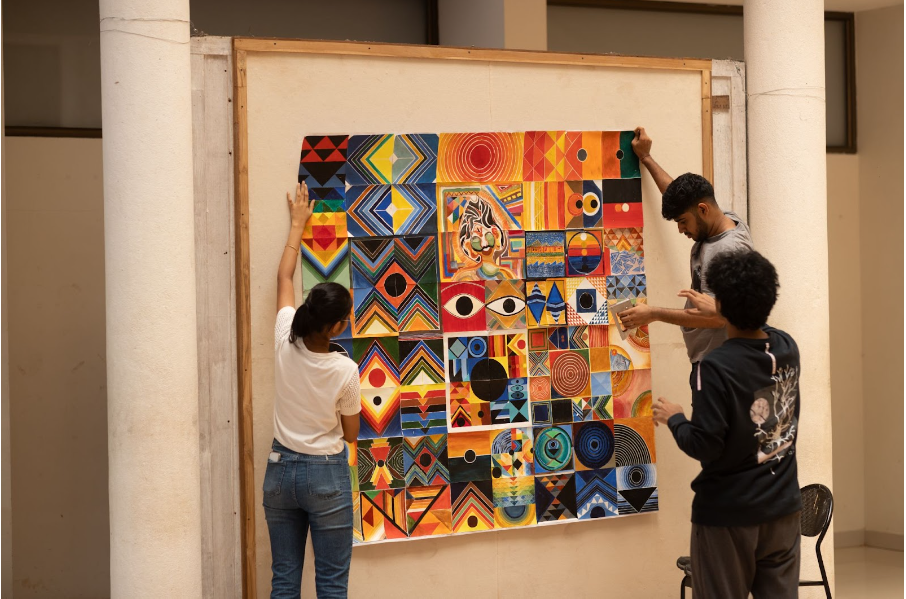
Art workshop by Artist Anil Devadiga inspired by artist S.H. Raza 2nd AUGUST, 2024.
To kickstart the academic semester with creativity and collaboration, students participated in an inspiring workshop centered on the works of renowned artist S.H. Raza. Curated and conducted by artist Anil Devadiga and the faculty team, the session introduced students to Raza’s philosophy, his iconic use of the bindu, geometry, and the emotional power of color. Through guided discussions and hands-on exploration, students interpreted Raza’s ideas in their own unique styles. The workshop culminated in the creation of a large installation art panel—a vibrant collage made from individual student artworks assembled into one collective piece. This collaborative installation not only reflected the diverse expressions of each participant but also symbolized unity, creativity, and a shared journey into artistic exploration. The final artwork now stands as a powerful representation of the students’ collective energy and marks a meaningful and inspiring start to the semester.
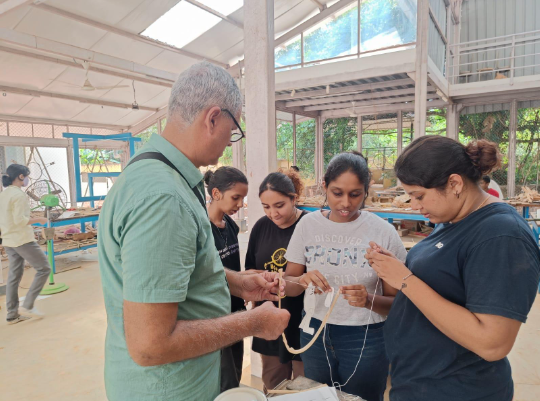
Bamboo Toy making workshop by Ar. Kanwarjit Nagi: 27th and 28th MARCH, 2024
An extraordinary workshop on Toy making with Bamboo was led by the talented Ar. Kanwarjit Nagi—a master of bamboo craftsmanship. It was an immersive experience in the art of creating whimsical toys from this versatile material. The objective of the workshop was to Increase the capability of students through- Tactile experience, Imagination and Creativity, and Physical management of tools". A few interesting toy models of Busy Hens, Expanding Crocodile, Loop Glider, Magic Mill, Propeller, Puppeteer Whistle, etc were developed during the workshop.
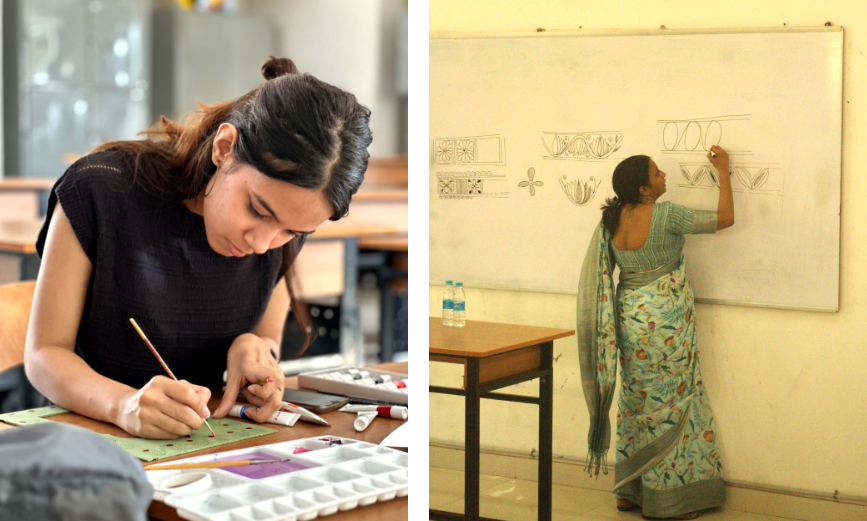
Madhubani art workshop by Rashmi Kodikal 1st March 2024
As part of Kalaakrti series during the EKAYANA fest at NIA, a vibrant workshop on Madhubani Art was conducted by artist Rashmi Kodikal. The session introduced participants to the traditional folk art of the Mithila region, known for its bold lines, intricate motifs, and natural colors. Rashmi shared the historical and symbolic richness of Madhubani, highlighting its deep connection with rituals, mythology, and daily life. The hands-on workshop was structured into four engaging segments—starting with an introduction to the art form, followed by guided practice of traditional motifs, border painting techniques, and culminating in the creation of personal artworks. Participants explored traditional themes using modern materials, bringing their own interpretations to life while staying rooted in cultural authenticity. The workshop offered a unique blend of storytelling, technique, and expression, celebrating one of India’s most cherished folk traditions and leaving participants inspired by its timeless beauty and relevance.
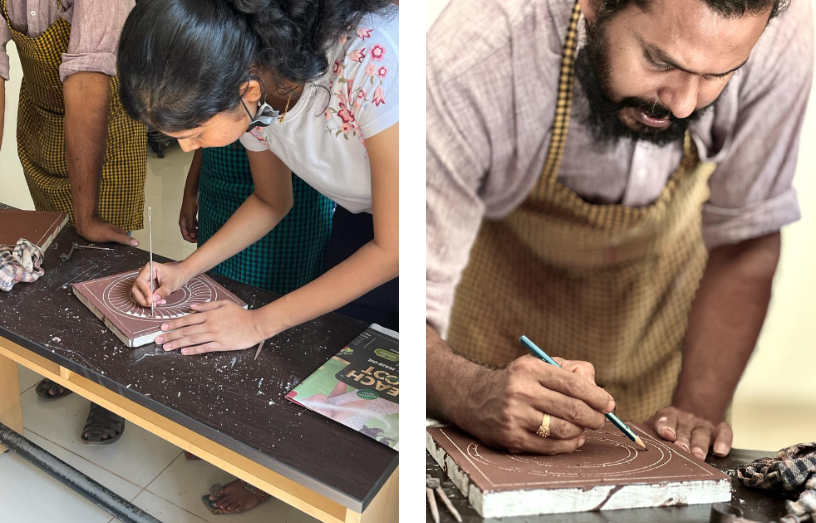
Kaavi art workshop by artist Janardhan Havanje: 1st and 2nd March, 2024.
A hands-on Kaavi Art workshop was conducted by renowned artist Janardhan Havanje. Rooted in the coastal heritage of Karnataka, Kaavi art is known for its intricate patterns etched onto red oxide backgrounds, traditionally found in temples and heritage structures. The workshop offered students a rare opportunity to learn directly from a practicing artist and understand the cultural significance, techniques, and materials involved in this unique mural tradition. Students engaged in creating their own Kaavi artworks under Janardhan’s guidance, exploring the process of sketching, etching, and developing symbolic compositions. The session was both informative and immersive, encouraging appreciation for indigenous art and craftsmanship. Through this enriching experience, students gained a deeper understanding of Indian visual culture while also exploring ways to creatively reinterpret traditional practices in contemporary contexts.
Design submitted by Ahmed Mashal and Bipin Pal (eighth semester) for the "120 Hours" International Architecture Student Competition. This work was exhibited at the Oslo School of Architecture, Svalbard, Norway.
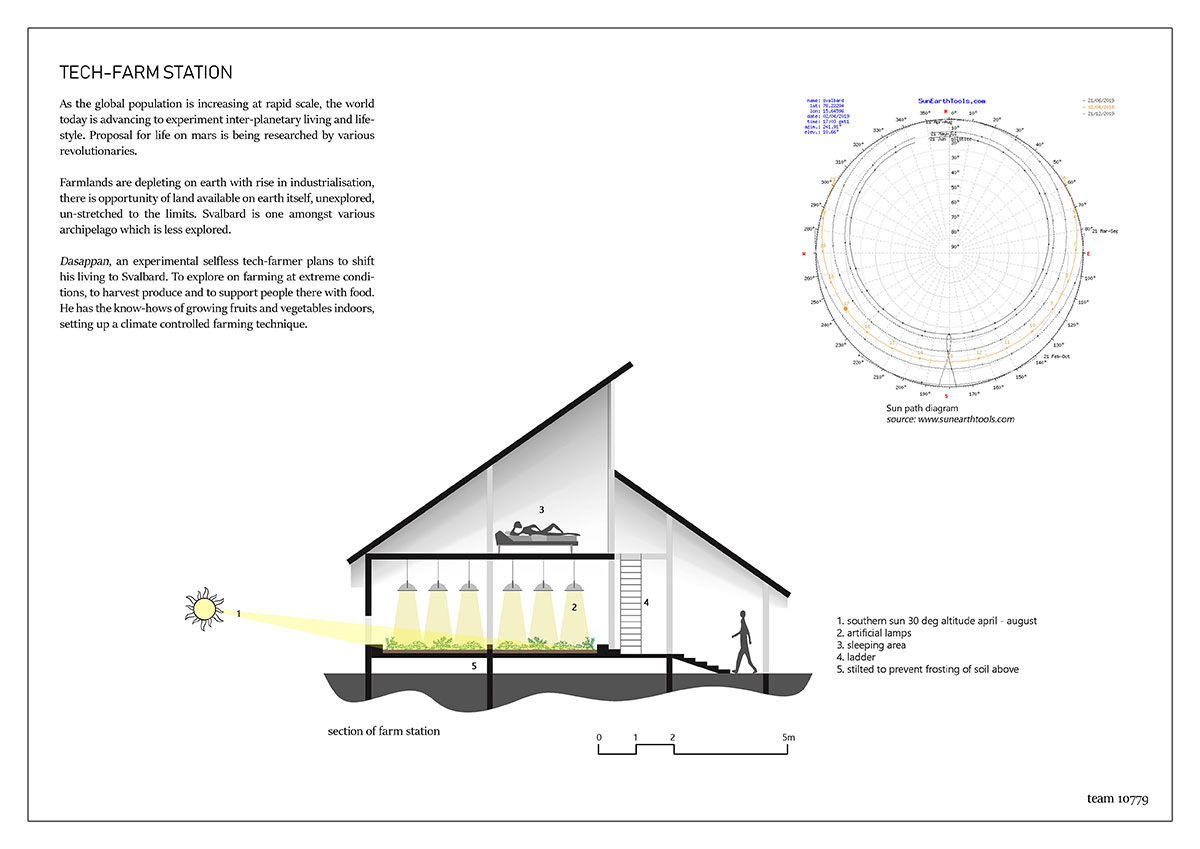
In Praise of Bamboo: (29th May – 10th June)
2 week workshop conducted by Vaibhav Kaley. Vaibhav Kale is co-founder of Wonder Grass, an enterprise in bamboo building system. Outline of the workshop was to introduce bamboo as a building material resource to students. Students explored and experimented with bamboo for making building components and explored structural qualities of the material and its joineries.
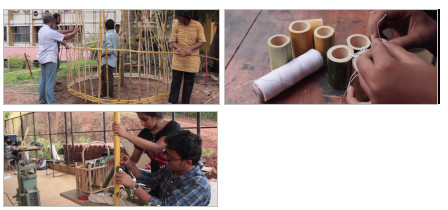
Heritage and Conservation (5th June – 10th June)
1 week workshop conducted by Pankaj Modi . Pankaj Modi is a conservation architect and has been involved in many restoration projects around the country. This workshop was a combination of research, documentation, hands on experience and site visits. Within Mangalore area several locations with potential heritage value were identified and these sites were researched and documented by the participants.
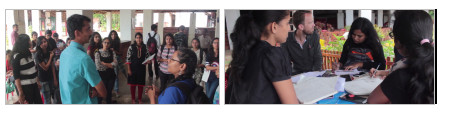
Paper Engineering (29th May – 31st May)
3 day workshop conducted by Arun Desai. Arun Desai is India’s only Paper Engineer. He is post graduate in Mathematics and did his research on Geometric constructions through paper folding for which he was conferred the degree of Paper Engineer. Workshop had exercises which helped participants to create challenging and appealing installations.

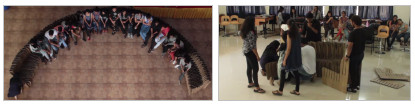
Cardboard Furniture Workshop (01st June to 3rd June):
3 day workshop conducted by Bangalore based design driven makerspace THE WORKSHOP. Participants were taught how to design and construct furniture out of cardboard by exploring its structural qualities, testing joints and cutting technologies.
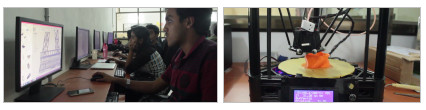
3D Printing Workshop (05th June to 07th June)
3 day workshop conducted by Contrawax 3D Systems. Principles and backgrounds of 3D Printing was explained to participants so that participants are ready to use this promising technique in the future.
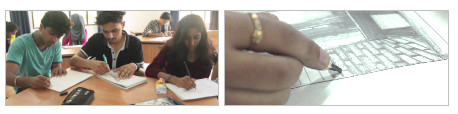
Dream Draw Design (08th June to 10th June)
3 day workshop conducted by Ajit Rao. Ajit Rao is an architect, sculptor, painter, designer, cartoonist, caricaturist, comic-book artist, and animation trainer. This workshop was to awake the dominant consciousness in participants towards subtle design elements such as scale, proportion and composition
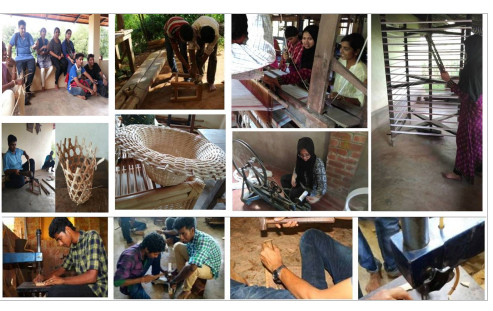
Pilikula Nisarga Dhama, Aug –Nov 2017: Cane, Pottery, Carpentry, Handloom August, 2017 – November, 2017
The weekend sessions of hands on approach of students of Nitte Institute of Architecture were conducted at the Pilikula Artisans Village, a unit under the Pilikula Nisarga Dhama at Mangalore. As an outcome students were able to interact with local artists and understand the importance of applied functions on varied fields like cane, handloom, clay and carpentry first hand by the artists themselves.
Outdoor landscape painting
17th March, 2018 Workshop was based on observation of location and recording it through representational quality, in fact converting the fundamental understanding such as the interplay of light and shades on the location, analytical illusion of volume , solidity , dimension , dept other detail factors as in structure , components , material , perspective etc . With these objective the resource person artist Syed Asif Ali gave demonstration to our students of 2nd sem and 1st sem.
Workshop on Tensile structure
31st March, 2018 The program was conducted to imbibe the idea of tensile structure its use, also understanding the structural behavior of the material as per the form. Students were asked to take the form from the previous exercise and transform it to tensile structure of the same, along with the understanding of the support system. As well as exploring the use of it as a shading device or as a kinetic sculpture.