

About the program
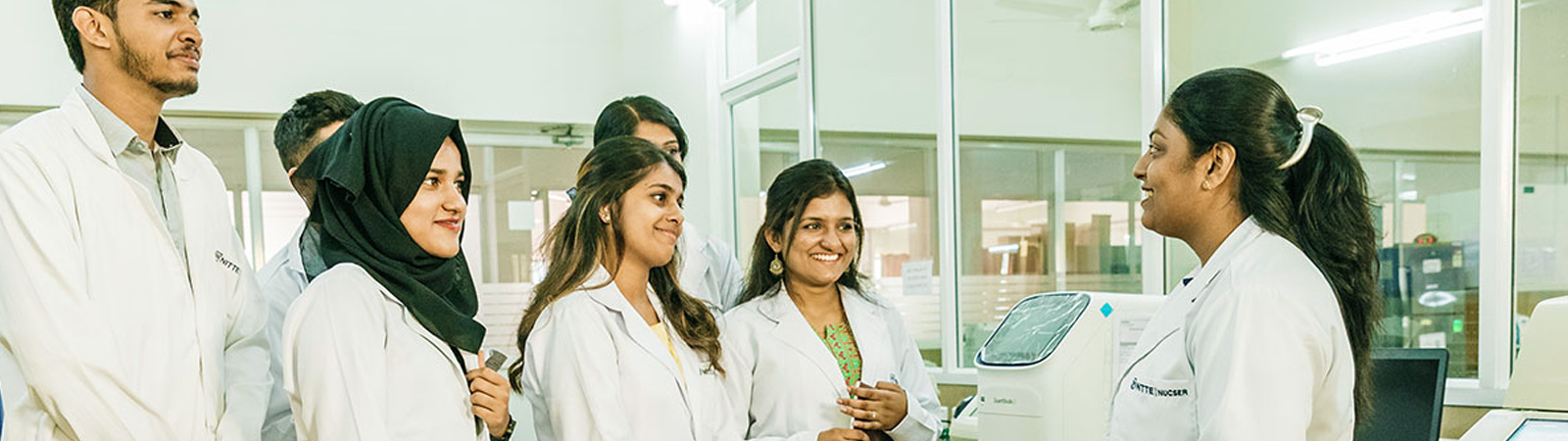
The MSc Microbiology program is designed for students preparing for careers, providing them with knowledge and skills in both basic and applied microbiology. The choice-based credit system, a shift from the traditional marking system, provides students with the opportunity to choose from a variety of courses, including core, generic, discipline-specific electives, and skill enhancement courses. The courses offered enable students to acquire up-to-date scientific knowledge and develop high-level skills not only in conventional microbiology but also in applied aspects of its use in health, food, agriculture, and the environment. The program includes a one-year research project that begins in the third semester, along with coursework, and continues through the fourth semester, dedicated exclusively to project work.
| Particular | Details |
| Program | MSc Microbiology |
| Institution | Nitte University Centre for Science Education and Research (NUCSER) |
| University | Nitte (Deemed to be University), Mangaluru |
| Degree | Master of Science (MSc) |
| Duration | 2 Years / 4 Semesters |
| Intake | 20 Students |
| Admission | Selection to the MSc Microbiology program shall be on the basis of merit obtained in the qualifying examination. |
| Accreditation/ Approval | UGC, offered under Nitte (Deemed to be University) |
| Key Areas | Microbiology, Biochemistry, Immunology, Molecular Biology, cell and developmental biology, Microbial genetics, Genetic engineering, Biotechnology, Research Methodology & Biostatistics, In vivo and In vitro model systems, Genomics and proteomics, Advance Imaging Technology, Seminar, and Research Project |
| Mode | Post graduate program |
Why study the MSc Microbiology at NUCSER?
The M.Sc. Microbiology program at NUCSER provides an interdisciplinary and research-oriented education in both fundamental and applied microbiology. The program combines core microbiological sciences with specialised areas such as medical microbiology, industrial microbiology, biotechnology, bioinformatics and biostatistics, while providing sustained exposure to research and advanced laboratory technologies.
After completing the program, students will be able to:
- Acquire knowledge of complex life processes in microorganisms.
- Gain an in-depth understanding of the significance and applications of microorganisms.
- Plan and accomplish a research project in relevant topics through critical analysis and logical interpretation of scientific data.
- Formulate and solve research hypotheses in microbiology.
- Enunciate potential career paths in biological science.
- Appraise responsible conduct of research relevant to social need and to practice bioethics and biosafety in scientific research.
- Apply knowledge and offer solutions to emerging challenges in one health.
- Comprehensive and interdisciplinary curriculum
Students are exposed to a broad range of subjects, including Genetics, Microbial Physiology, Biochemistry, Immunology, Biotechnology, Medical Microbiology, Industrial Microbiology, Bioinformatics and Biostatistics. This interdisciplinary curriculum enables students to understand microorganisms from molecular, cellular, clinical and technological perspectives. - Strong research orientation
A key feature of the program is its emphasis on research. Students undertake a one-year research project, with full-time research in the final semester. This provides sustained exposure to scientific investigation and enables students to apply contemporary microbiological knowledge in a research setting. - Hands-on experience with advanced technologies
The research component enables students to develop practical experience and high-level skills through exposure to contemporary scientific approaches and advanced technologies. NUCSER's practical-oriented postgraduate programs are supported by state-of-the-art research laboratories. - Exposure to infectious disease research
NUCSER has a dedicated research environment in Infectious Diseases and Microbial Genomics, with research spanning infectious disease biology, antimicrobial resistance, host-pathogen interactions, rapid diagnostics, microbial genomics and metagenomics, biocontrol strategies, drug discovery and therapeutics. - Exposure to microbial genomics and bioinformatics
Modern microbiology increasingly depends on genomic and computational approaches. The program's inclusion of bioinformatics and biostatistics, together with NUCSER's research in microbial genomics and comparative genomics, provides students with a foundation for understanding data-driven approaches to microbial research. - Focus on antimicrobial resistance
Antimicrobial resistance is an important area of contemporary microbiological research. NUCSER's research activities include studies on antimicrobial resistance, drug-resistance mechanisms and multidrug-resistant pathogens, providing students with exposure to an important global scientific and healthcare challenge. - Exposure to molecular diagnostics
The department's research includes the development of rapid and novel diagnostic approaches for infectious diseases. This provides an academic environment in which students can understand how microbiology, molecular biology, and biotechnology can be integrated to support pathogen detection and disease diagnosis. - Choice-based credit system
The program follows a Choice-Based Credit System (CBCS), allowing students to engage with core courses, generic electives, discipline-specific electives and skill-enhancement courses. This structure provides greater flexibility in developing academic interests and competencies. - Development of research and scientific skills
Through coursework, laboratory training and extended project work, students can develop skills in scientific problem-solving, experimental design, laboratory investigation, data analysis and interpretation, scientific communication and independent research. - Learning in a multidisciplinary research environment
Microbiology at NUCSER is integrated with wider areas of biological and biomedical research. Students can therefore learn within an environment where microbiology intersects with biotechnology, biomedical sciences, bioinformatics, molecular biology, food science and other biological disciplines. - Foundation for diverse career and higher-study pathways
The combination of fundamental microbiology, specialised subjects, practical training and research experience provides a foundation for careers in basic and applied microbiology, as well as for pursuing advanced research and doctoral studies in microbiology and related biological sciences. - Preparing students for the future of microbiology
The M.Sc. Microbiology program brings together classical microbiology, molecular biology, infectious disease research, genomics, bioinformatics, diagnostics and biotechnology. This integrated approach helps students develop the scientific knowledge and research skills required to engage with emerging challenges and opportunities in modern microbiology.
Eligibility
Bachelor’s degree in Applied Biological Sciences / Biomedical Science / Biotechnology / Biochemistry / Microbiology / Agricultural Sciences / Food & Nutrition / Environmental Science / Veterinary Science / Fisheries Science / BE or BTech in Biotechnology / Graduates in Medicine / Dentistry / Pharmacy / Nursing or any other equivalent life science degree from a recognised university, with a minimum of 50% marks in aggregate.
Minimum Marks / Entrance
The minimum eligibility marks and selection criteria are as per Nitte (Deemed to be University).Application Deadlines
Dates for application, counselling, and commencement are notified on the admission portal.Admission Procedure
Students seeking admission to MSc programs are required to submit the Admission Query form available on apply.nitte.edu.inOn receipt of the same, the Admission Section will guide students with the process of registration and admission.
Admission to MSc programs are based on merit in the qualifying examination.
Documents required for admission to MSc programs
- Class 10 Marks Card (Original + 2 attested copies)
- Degree Marks Cards of all years (Original + 2 attested copies)
- Provisional Degree / Degree Certificate (Original + 2 attested copies)
- Transfer Certificate from the institution last attended (Original + 2 attested copies)
- Conduct Certificate from the institution last attended (Original)
- Migration Certificate from the University last studied (Original)
- Eligibility Certificate issued by Nitte University (This will be handled by Nitte)
- Physical Fitness Certificate from a registered medical practitioner (Original)
- Blood Group Certificate (Original)
- Aadhaar card copy of the student
- Photographs: Recent colour photo with white background, of resolution 300-600 dpi Passport size 5 Nos. (35mm x 45mm) & Stamp size 5 Nos. (20mm x 25mm)
Program structure:
The curriculum is designed to build strong theoretical and practical foundations while providing extensive hands-on research training and skill-based education in biological sciences. Students will learn through classroom teaching, laboratory sessions, supervised research projects/ dissertations, seminars, field exposure, and assessments.
Key Subjects & Specialisation Areas
Some of the core and advanced subjects typically covered include:
The program includes substantial laboratory-based skill development and a research component, where students gain real-world experience in:
Students get access to state-of-the-art research and model system facilities, including:
Click here to download the curriculum
The curriculum is designed to build strong theoretical and practical foundations while providing extensive hands-on research training and skill-based education in biological sciences. Students will learn through classroom teaching, laboratory sessions, supervised research projects/ dissertations, seminars, field exposure, and assessments.
Key Subjects & Specialisation Areas
Some of the core and advanced subjects typically covered include:
- Microbiology
- Biochemistry
- Immunology
- Molecular Biology
- Microbial Genetics
- Genetic engineering
- Biotechnology
- Research Methodology & Biostatistics
- Bioinformatics
- Cancer Biology
- Stem Cells and Regenerative Medicine
- In vivo and In vitro model systems
- Genomics and proteomics
The program includes substantial laboratory-based skill development and a research component, where students gain real-world experience in:
- Methods in cell biology and microbiology
- Diagnostic Lab Techniques
- Analytical Techniques in Biotechnology
- Application of Biotechnology in Food Science
- Bioinformatics and computational biology
Students get access to state-of-the-art research and model system facilities, including:
- Infectious Disease Lab
- Molecular genetics and cancer biology Lab
- Molecular Biology Lab
- Genetic engineering and biotechnology Lab
- Food Science Lab
- Proteomic Lab
- Analytical Lab
- Imaging Lab
- Plant Tissue Culture Lab
- Cell Culture Lab
- Computational Biology Lab
- Genomics Lab
- Zebrafish Lab
- Drosophila Lab
- C. elegans Lab
- Aquaculture- Wet Lab
- Seminar presentations
- One-year supervised research project
- Research seminar/presentation
- Field trip
Click here to download the curriculum
NUCSER offers state-of-the-art facilities and resources to support advanced teaching and research in Biological Science.
Labs & Infrastructure
Labs & Infrastructure
- Advanced Research Labs: Equipped with modern equipment and infrastructure. Include labs such as the Infectious Disease Lab, Molecular Genetics and Cancer Biology Lab, Molecular Biology Lab, Genetic Engineering and Biotechnology Lab, Virology Lab, Food Science Lab, Proteomics Lab, Analytical Lab, and Plant Tissue Culture Lab.
- Central facilities: Equipped with advanced facilities to support cutting-edge research, including an Imaging Lab, Cell Culture Lab, Biosafety Level 2, centrifugation facility, freezer room, and sterilisation facility.
- In vivo model systems: Equipped with state-of-the-art model system facilities, including Zebrafish lab, Drosophila lab, and C. elegans lab
- Computational biology facilities: Equipped with high-end computers for bioinformatics and biological data analysis, and a Genomics lab
- Aquaculture- wet lab facility: Equipped with a wet lab facility for aquatic animal studies
- NITTE-GOK Centre of Excellence in AQUAMARIN: Established under the Government of Karnataka's Biotechnology Policy by KARNATAKA INNOVATION AND TECHNOLOGY SOCIETY, at NUCSER, Nitte (Deemed to be University)
- FAO Reference Centre for Antimicrobial Resistance and Aquaculture Biosecurity, at NUCSER, Nitte (Deemed to be University)
- Department of Science and Technology supported Technology Enabling Centre at NUCSER, Nitte (Deemed to be University)
- Nitte DU - Radboud UMC centre for human functional genomics and systems immunology at NUCSER, Nitte (Deemed to be University)
- A well-stocked library with an extensive collection of textbooks, journals, and research publications in audiology, speech-language pathology, neuroscience, and related fields.
- Access to online databases, e-journals, and digital libraries to facilitate advanced research and study.
- Digital classrooms and multimedia-enabled learning spaces enhance interactive teaching and student engagement.
- Student access to learning management systems and online portals for course materials, assignments, and communication.
Nitte University Centre for Science Education & Research (NUCSER) maintains strong partnerships between industry and academia to ensure that students gain hands-on experience and develop professional readiness in Biological Science.
Strategic Partnerships Mandatory supervised research project for all the master’s degree programs.
Opportunities for research internships within the PhD program through funded projects and interdisciplinary collaborations, Industry collaboration, and Biomedical science
Strategic Partnerships
- Collaborations with industries, medical institutions, and special education institutions.
- Tie-ups /MoU with a variety of industries, Start-Ups, specific academic and research institutes for advanced training, internships, teaching and research.
- Industry connections with companies for workshops and product demonstrations.
- Regular industry-led workshops in the field of biological science
- Guest lectures by national and international experts, researchers, clinicians, and industry specialists.
- Skill development seminars.
Commencement of Program
The MSc program commence on the date prescribed by the University, generally in August
