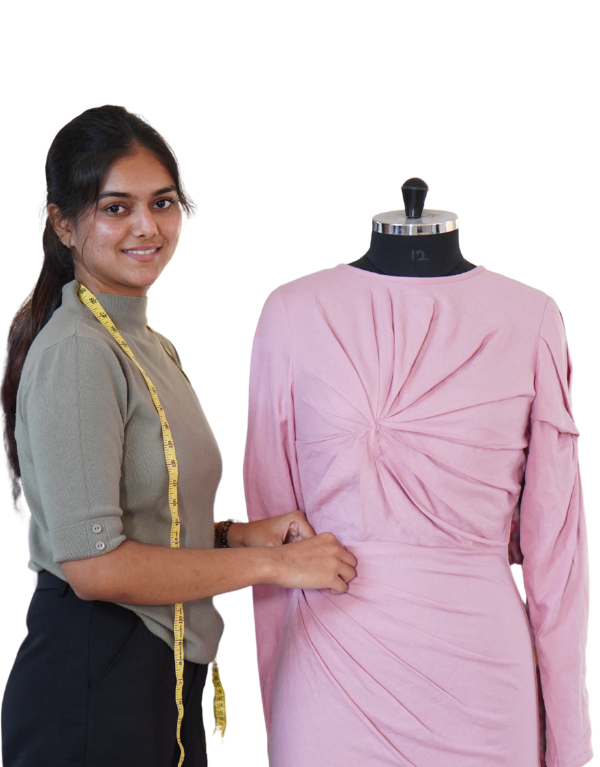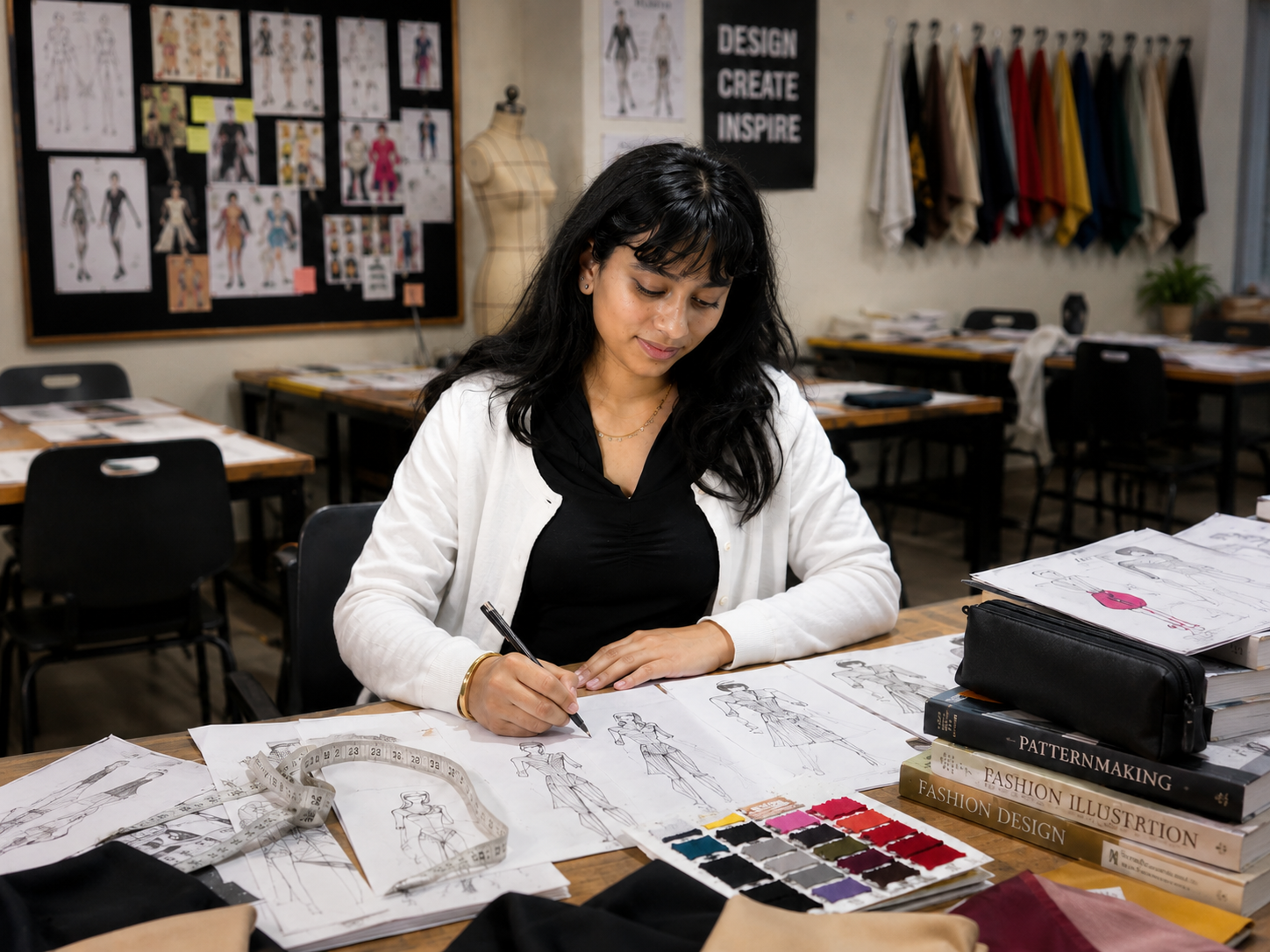
In design education, participation is particularly important. Whether students are studying fashion design, visual merchandising or other creative disciplines, learning often begins with the willingness to question, experiment and share ideas.
As educators, our goal should not be to force participation, but to create a learning environment where students want to participate.
Create a Safe Space for Creative Learning
Students should feel comfortable making mistakes. In creative education, experimentation is an essential part of the learning process.
Instead of immediately saying, “That is wrong,” we can ask:
“What made you think that?”
This simple change can turn a wrong answer into a learning opportunity. When students know that they will not be embarrassed for making mistakes, they become more confident in sharing their ideas and exploring different possibilities.
For fashion design students, this could mean experimenting with a design concept, presenting an unconventional idea or trying a new approach without being afraid of failure.
Ask Questions That Make Students Think
Good questions can create better learning.
Instead of asking students only to remember facts, educators can ask:
- What do you think will happen?
- Why do you think so?
- What evidence supports your idea?
- What would happen if we changed something?
Such questions encourage students to think rather than simply recall.
In fashion design education, this could mean asking why a particular silhouette works, how a material changes the character of a garment or what might happen if a design concept were approached differently.
Give Students Time to Think
Not every student can answer immediately.
After asking a question, pause and give students time to think. A few seconds of thinking time can give quieter students the confidence to participate.
Sometimes silence is not disengagement. It is thinking in progress.
This is especially relevant in creative classrooms, where students may need time to process an idea before expressing it through words, sketches or visual concepts.
Give Everyone a Way to Participate
Participation does not always mean speaking in front of the class.
Students can participate through:
Discussion • Drawing • Writing • Group Work • Demonstrations • Digital Activities • Presentations
This is particularly important in design education, where students may communicate their ideas more effectively through sketches, mood boards, prototypes, design explorations and visual presentations.
For fashion students, a classroom discussion can continue through a sketchbook, a mood board or a garment concept. Giving students different ways to express themselves creates a more inclusive and engaging learning environment.
Connect Learning to Real Life
Students engage more when they understand why something matters.
Instead of asking only, “What is colour psychology?”, ask:
“Why does a particular colour make a space, garment or visual identity feel calm, energetic or luxurious?”
Instead of simply teaching consumer behaviour, ask:
“Why does a customer choose one fashion brand over another?”
Connecting classroom concepts to real world applications helps students understand how their learning translates into the fashion and design industry.
When learning connects with real life, students become naturally more curious.
Value Questions as Much as Answers
A student asking “Why?” may be showing more curiosity than a student simply giving the correct answer.
Educators should create a classroom where students feel comfortable saying:
- “Why does this happen?”
- “What if we tried it differently?”
- “Could there be another answer?”
Questions are not interruptions to learning. They are part of learning.
In creative disciplines, questioning is often the starting point for innovation. Encouraging students to challenge ideas, explore alternatives and look at problems differently can help develop the critical thinking skills needed in the design industry.
Build Relationships
Students participate when they feel that their teacher genuinely cares about them.
Listening to a student's idea, appreciating their effort, encouraging them after a mistake or simply knowing their interests can make a significant difference.
Good relationships create the foundation for good learning.
For fashion and design students, where much of the learning process involves presenting personal ideas and creative work, a supportive relationship between educators and students can make the classroom more collaborative and encouraging.
The Real Goal
The goal is not a classroom where every student speaks all the time.
It is a classroom where students feel:
- Safe enough to make mistakes.
- Confident enough to share ideas.
- Curious enough to ask questions.
- Supported enough to keep trying.
When this culture is created, participation no longer has to be demanded.
Students participate because they feel that their voice matters.
As educators, perhaps our greatest responsibility is not simply to teach students what to think, but to create an environment where they feel confident enough to think, question, explore and discover.
That is where meaningful learning begins.